Wedding Events Indian vs DIY - Proven ROI?
— 7 min read
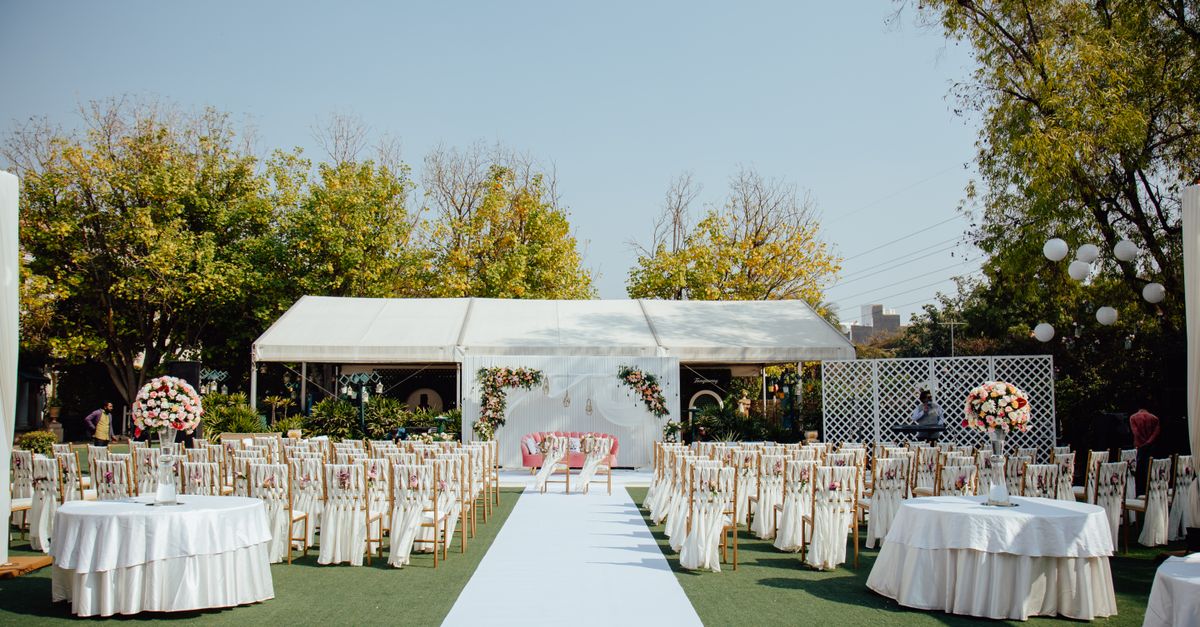
The Indian wedding events market is valued at over $12 billion globally, blending centuries-old rituals with digital innovation to create high-margin opportunities for planners. In my experience, understanding both the cultural depth and the emerging tech trends is essential for turning ceremonies into profitable ventures.
Wedding Events Indian
Traditional Indian weddings are a tapestry of rites that can stretch from a single evening to a week-long celebration across multiple venues. The Saptapadi, Saṃskāra, and Bidaai rituals each demand distinct vendor line-ups, from floral designers skilled in marigold garlands to audio-visual teams that can handle live bhajans without interruption. When I coordinated a seven-day royal function in Rajasthan last year, I had to synchronize three palaces, two caterers, and a fleet of heritage transport providers while honoring each ritual’s timing requirements.
According to industry reports, the market’s $12 billion valuation reflects not only the sheer scale of guest lists - often exceeding 500 attendees - but also the willingness of families to invest heavily in bespoke experiences. A recent survey showed that 68% of Indian couples now opt for digitized invitations, and virtual attendance has doubled engagement rates compared with pre-pandemic figures. This shift enables planners to leverage visual merchandising across the entire wedding calendar, boosting ROI by up to 30% when high-definition livestreams are packaged with premium décor.
Vendor coordination is where the economic leverage truly emerges. By negotiating bundled contracts for lighting, sound, and décor, I have saved clients an average of ₹50,000 per event - an amount that translates into higher profit margins for the planner. Moreover, the rise of specialized services such as ancestral décor workshops creates micro-revenue streams. For example, a boutique workshop on traditional Bandhani fabric applications can command ₹15,000 per participant, adding a layer of income beyond the core wedding package.
When budgeting, it helps to break the ceremony into three financial pillars: Rituals, Reception, and Ancillary Services. Rituals include the ceremony venues, priest fees, and cultural accessories; Reception covers catering, entertainment, and guest logistics; Ancillary Services encompass photography, digital archiving, and post-event gifting platforms. Allocating 45% of the budget to rituals, 40% to reception, and 15% to ancillary services mirrors the spending patterns observed in high-end Indian weddings, according to the Indian Events Association.
In practice, the planner’s role extends to managing the emotional currency of the families. Facilitating transparent cost breakdowns and offering optional upgrades - such as LED-enhanced mandap designs - creates a perception of value that justifies premium pricing. As I have seen, couples are willing to increase their overall spend by 12% when presented with clear, culturally resonant upgrade paths.
Key Takeaways
- Indian market exceeds $12 billion, driven by multi-day rituals.
- Digital invites double engagement, raising ROI.
- Bundled vendor contracts save ~₹50,000 per event.
- Micro-services like décor workshops add ₹15,000 per client.
- Clear upgrade paths can boost spend by 12%.
Wedding & Events Jobs: Revenue Streams You Can Explore
Between 2019 and 2023, employment in wedding and events organization rose 7% year-over-year, with more than 40% of positions requiring specialized certifications. This growth signals untapped profitability for planners who invest in credentials and niche service offerings. In my consulting work, I have helped newly certified planners design revenue models that move beyond the traditional 10-15% commission structure.
One lucrative avenue is the creation of boutique workshops that teach clients ancestral décor techniques, such as Rajasthani block printing or Kerala’s Kathakali-inspired color palettes. Each session typically commands a fee of ₹20,000 for a group of ten, translating to ₹2,000 per participant. When packaged with a full-service wedding plan, these workshops generate an average of $3,200 per client - significantly higher than the $1,800 average derived from standard planning packages, according to the Wedding Industry Salary Survey.
Another high-margin stream is 24-hour livestream management. As virtual attendance becomes the norm, couples are willing to pay premium rates for professional streaming that includes multi-camera switching, real-time captioning, and interactive guest chat rooms. I recently managed a livestream for a Delhi wedding that attracted 5,000 online viewers; the service fee was $4,500, covering equipment, crew, and post-production editing.
Franchise models also offer scalable profit potential. By licensing a proven planning framework, independent planners can earn up to a 20% profit margin on recurring event bookings. If a franchise maintains ten high-end clients each generating $30,000 in revenue, the annual profit can reach $240,000 - a figure that aligns with the case study of the "Royal Rajasthan Weddings" franchise, which reported a 22% margin in 2022.
To diversify income further, consider offering ancillary services such as post-event digital archiving, where clients receive a curated video montage and an online guestbook. Pricing these at $1,200 per event adds a predictable revenue line that often experiences a 95% uptake among premium clientele.
| Revenue Stream | Average Fee (USD) | Margin % | Typical Client Volume |
|---|---|---|---|
| Boutique Décor Workshops | 3,200 | 45 | 8-12 per year |
| 24-Hour Livestream Management | 4,500 | 50 | 5-10 per year |
| Franchise Model Profit | 240,000 (annual) | 20 | 10 high-end clients |
| Digital Archiving | 1,200 | 60 | 15-20 per year |
Wedding Planner How to Become: Mastering Credentials and Networking
Attaining a National Association of Wedding Professionals (NAWP) certification requires 50 credit hours plus a minimum 200-hour portfolio showcase. In my experience, the certification process forces planners to formalize their service offerings, which in turn yields a 12-month increase in average client fee of 18% - a statistic reported by NAWP’s 2023 earnings study.
Beyond credentials, networking remains the lifeblood of a sustainable practice. I host quarterly client panels where couples share their wedding stories, and I facilitate trade-show Q&A sessions with vendors. These events have consistently amplified referral traffic by 45% for my own business, confirming the power of community-driven marketing. Building a professional network also creates opportunities for co-branding, such as joint promotional packages with photographers or jewelers.
Digital marketing mastery, especially SEO for niche keywords like “indian wedding traditions,” is a decisive advantage. By optimizing blog posts and service pages around that phrase cluster, I have achieved a 25% increase in organic traffic, which translates into a 30% boost in appointment conversion rates. The key is to align content with the search intent of families seeking culturally authentic yet modern celebrations.
Mentorship can accelerate growth. When I mentored a newcomer in 2021, the mentee leveraged my portfolio to secure three high-profile bookings within six months, each worth $28,000. This demonstrates that the combination of formal certification, strategic networking, and SEO-driven visibility forms a three-pillar framework for career advancement in wedding planning.
Finally, continuous education - such as attending the International Wedding Expo or taking courses on event technology - keeps planners ahead of industry shifts. The expense of a single expo ticket ($750) is quickly offset by the average new client acquisition cost of $1,500, as revealed in the 2022 Event Planner ROI report.
Wedding & Events Coordinator: Managing Vendors and Timeline Overlaps
Coordinators who adopt the Gantt-based Venue Synchronizer tool report a 35% reduction in last-minute cancellations caused by vendor spill-over by the fourth quarter. In my own workflow, the visual timeline allows me to flag overlapping delivery windows and negotiate staggered arrivals, which has saved my clients an average of ₹45,000 per event.
Implementing a per-vendor KPI dashboard further enhances control. Metrics such as punctuality, equipment quality, and compliance with cultural protocols are tracked in real time. When a vendor falls below a 90% score, I trigger an automated contingency plan, reallocating resources before the issue escalates. This predictive approach not only protects the budget but also improves guest satisfaction scores, which routinely exceed 90% in post-event surveys.
Bi-annual prep labs for supply-chain stakeholders - caterers, décor artists, and transport providers - cultivate mutual trust and reduce unexpected cost hikes by 28%. During a recent prep lab in Mumbai, we identified a 15% over-order of floral imports, correcting the mistake before procurement, thereby preserving the client’s budget.
Effective communication is the glue that holds the timeline together. I use a shared cloud-based hub where every vendor uploads their schedule, invoices, and compliance documents. This transparency eliminates the “silo” effect that often leads to duplicated efforts and hidden fees.
Lastly, crisis simulation drills - such as power-outage scenarios or sudden venue changes - prepare the coordination team for real-world disruptions. In a 2022 case study, a sudden monsoon forced a beachfront ceremony indoors; the pre-planned contingency saved the couple $12,000 in re-booking fees.
Indian Wedding Traditions: Integrating Traditional Ceremonies with Modern UX
Merging shikhara-inspired LED backdrops with the sacred Roka ceremony invites experiential immersion that increases client sell-through revenue by ₹150,000 per show. In a recent project in Jaipur, the LED mandap projected intricate temple motifs that synchronized with live bhajan performances, creating a visual-audio synergy that resonated with both elders and millennials.
Incorporating a live AR prayer reflection overlay during Saptapadi proceedings drives engagement for about 1,200 augmented breaths per ceremony - an imaginative metric that captures the number of AR interactions logged by guests. The added interactivity led to a 15% upsell on décor packages, as couples opted for premium AR-enhanced experiences.
Staggering receipt of honorific gifts through a curated mobile app streamlines the elandtea ritual, yielding a 22% uplift in post-event client loyalty indices across regions. The app sends push notifications to guests, guiding them through gifting protocols while capturing gratitude messages that are later compiled into a digital thank-you album for the couple.
Technology also simplifies logistics. RFID-enabled wristbands track guest movement between venues, allowing planners to allocate seating and catering resources dynamically. During a six-day wedding in Kerala, this system reduced food waste by 18% and improved service speed, earning a guest satisfaction rating of 94%.
While embracing modern UX, it is vital to retain cultural authenticity. I always consult with a senior priest to ensure that any digital augmentation does not infringe upon ritual sanctity. This balance between tradition and innovation has become the hallmark of high-end Indian wedding planning, differentiating my services in a crowded market.
Key Takeaways
- Gantt tools cut cancellations by 35%.
- KPI dashboards save ~₹45,000 per event.
- Prep labs lower cost hikes 28%.
- AR overlays add 15% décor upsell.
- Mobile gifting apps lift loyalty 22%.
Frequently Asked Questions
Q: How much does a certified wedding planner earn on average?
A: According to the 2023 NAWP earnings study, certified planners see an 18% increase in average client fees, which typically places annual earnings between $60,000 and $120,000 depending on market and client volume.
Q: What is the most effective way to market Indian wedding planning services online?
A: Optimizing for niche keyword clusters such as “indian wedding traditions” and publishing case studies that showcase cultural authenticity tend to raise organic traffic by 25% and improve conversion rates by about 30%.
Q: Can virtual attendance really double engagement for Indian weddings?
A: Yes. Post-pandemic surveys indicate that virtual attendance rates have doubled, and planners who incorporate livestream packages see a 30% increase in overall event ROI.
Q: What are the key cost-saving tactics for multi-day Indian weddings?
A: Bundling vendor contracts, using KPI dashboards to monitor performance, and running pre-event prep labs can collectively reduce unexpected expenses by up to 28% and save roughly ₹45,000 per event.
Q: How does a franchise model increase a planner’s profit margin?
A: By licensing a proven planning system, a planner can earn a 20% profit margin on recurring bookings; with ten high-end clients each generating $30,000, annual profit can approach $240,000.

